
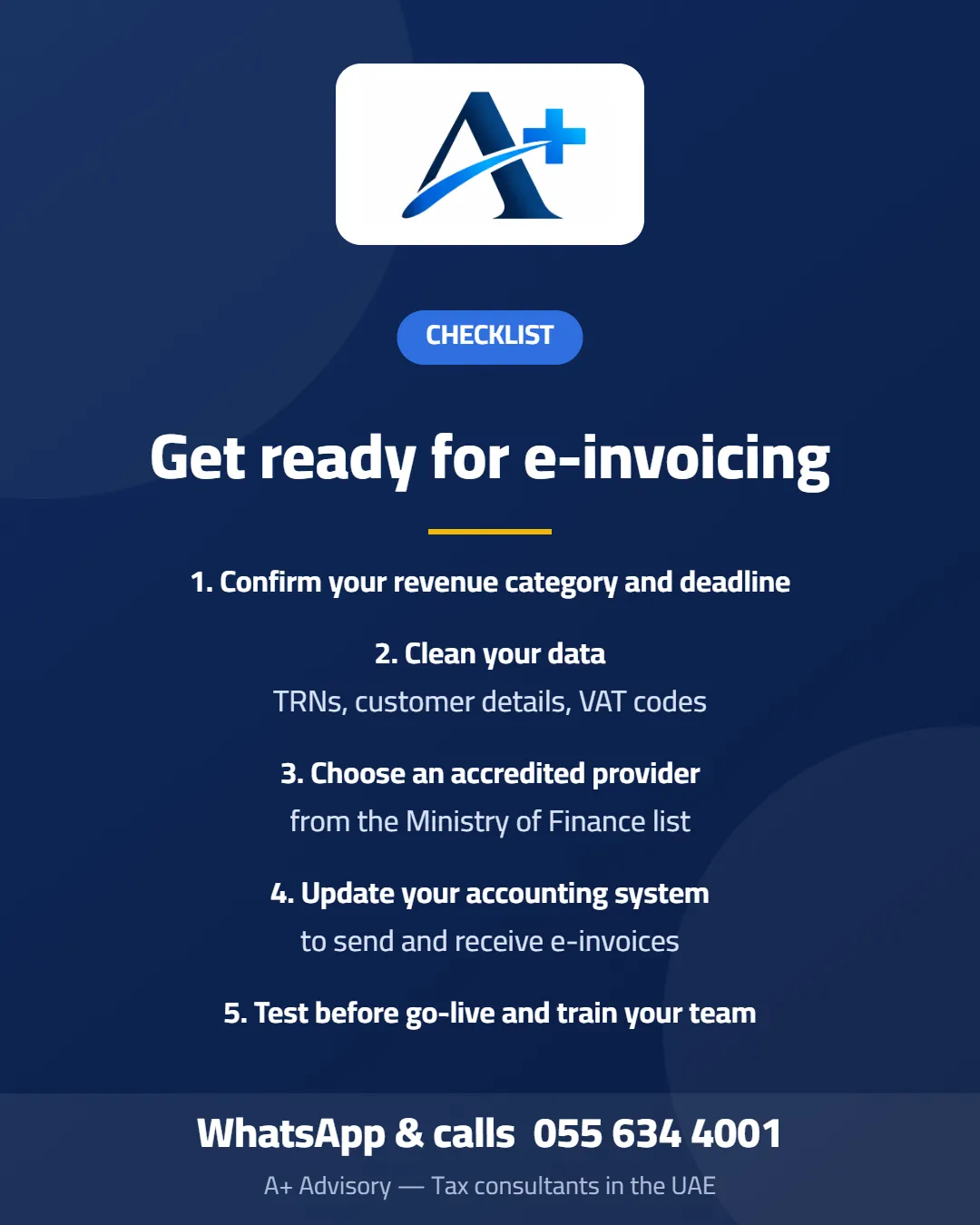
UAE E-Invoicing Readiness Checklist: 5 Steps
Use this checklist to prepare for e-invoicing without last-minute stress.
1. Confirm your revenue category and deadline
AED 50 million or more: appoint an ASP by 30 October 2026 and go live 1 January 2027. Under AED 50 million: appoint by 31 March 2027 and go live 1 July 2027.
2. Clean your data
- Customer and supplier TRNs
- Legal names and addresses matching trade licences
- Correct VAT treatment codes for each product or service
- Consistent item descriptions and units
3. Choose an accredited service provider
Pick from the Ministry of Finance list of accredited providers. Compare integration with your accounting system, sending and receiving support, pricing, support in Arabic and English, and data hosting.
4. Update your accounting system
Your system must produce invoices in the required structured format and receive supplier e-invoices. Check with your software vendor early.
5. Test and train
Run real scenarios: standard sales, zero-rated exports, credit notes, reverse charge. Train sales, finance and procurement teams.
Record keeping: e-invoicing records must be kept in the UAE for the required retention period.
Read the full guide: UAE e-invoicing: rules, deadlines and requirements.
Questions about your situation? Message us on WhatsApp or book a consultation. Fixed fees agreed upfront.
General information only, not advice for your specific situation.


