
UAE E-Invoicing Penalties: What Counts as Non-Compliance
UAE E-Invoicing Penalties: What Counts as Non-Compliance
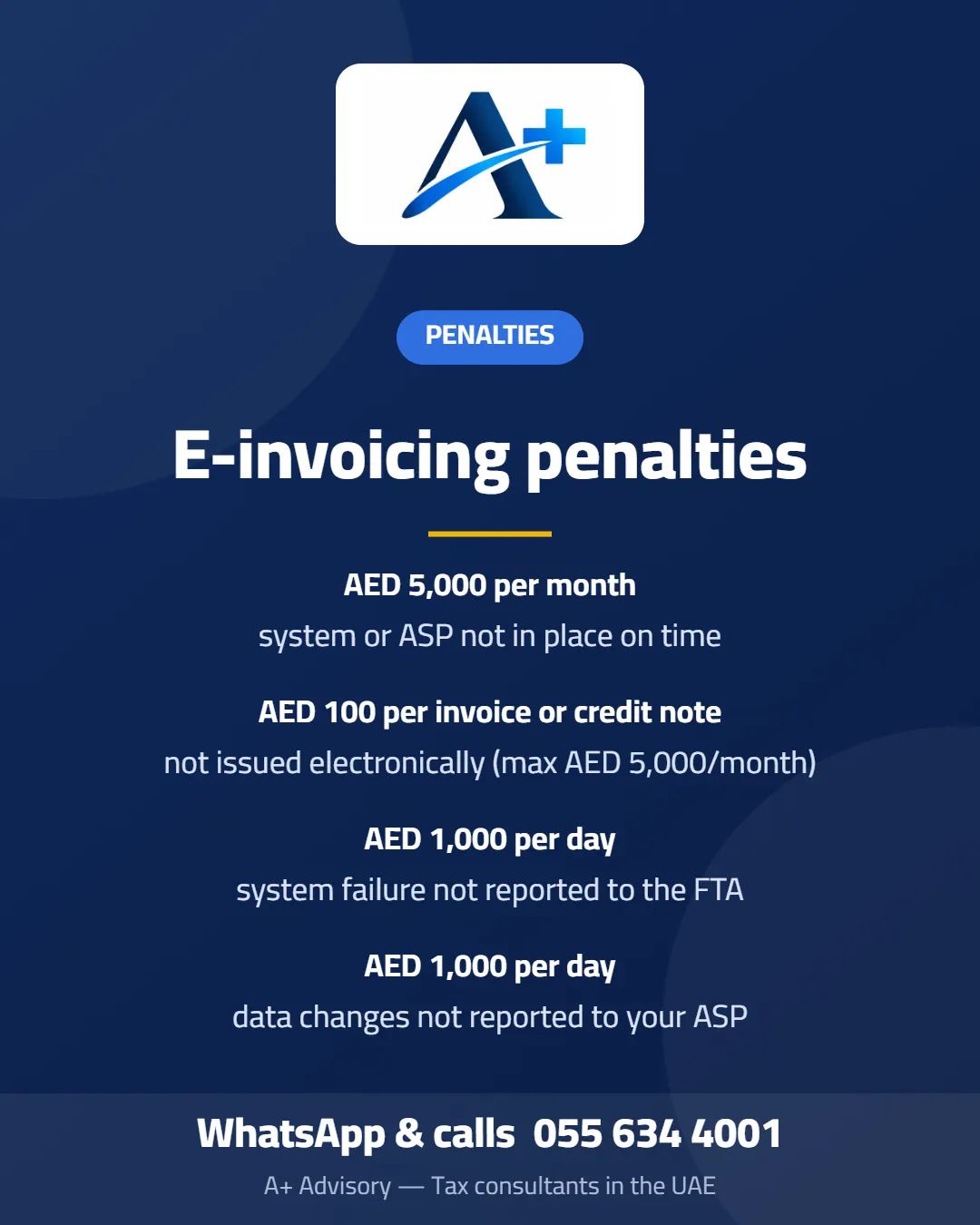
The UAE e-invoicing system comes with its own set of administrative penalties, set out in Cabinet Decision No. 106 of 2025. The penalties are fixed amounts, and several of them repeat — some for every month a failure continues, others for every invoice affected. That means a small delay can become expensive quickly.
Which failures are penalised?
- Not implementing the system on time — failing to put an e-invoicing solution in place, or failing to appoint an accredited service provider (ASP), by your deadline.
- Not issuing e-invoices — issuing an invoice in any other format (for example a PDF sent by email) when an electronic invoice is required.
- Not issuing electronic credit notes — credit notes are covered by the same rules as invoices.
- Not reporting a system failure — a failure that stops you issuing or sending e-invoices must be reported to the FTA within 2 business days.
- Not updating your ASP — changes to your registered data must be notified to your ASP on time.
Why the deadlines matter
Businesses with revenue of AED 50 million or more must appoint an ASP by 30 October 2026 and go live on 1 January 2027. Businesses under AED 50 million must appoint an ASP by 31 March 2027 and go live on 1 July 2027. Missing the appointment date is itself a failure, before a single invoice is issued.
Practical steps
- Confirm your revenue category and your exact dates.
- Shortlist an accredited service provider from the Ministry of Finance list early.
- Check that your invoicing system can issue invoices and credit notes in the required format.
- Agree internally who reports a system failure to the FTA, and how.
For the full timeline, see our article on UAE e-invoicing deadlines.
Not sure whether e-invoicing applies to you or when? Message us on WhatsApp or book a consultation. Fixed fees agreed upfront.
General information only, not advice for your specific situation.


